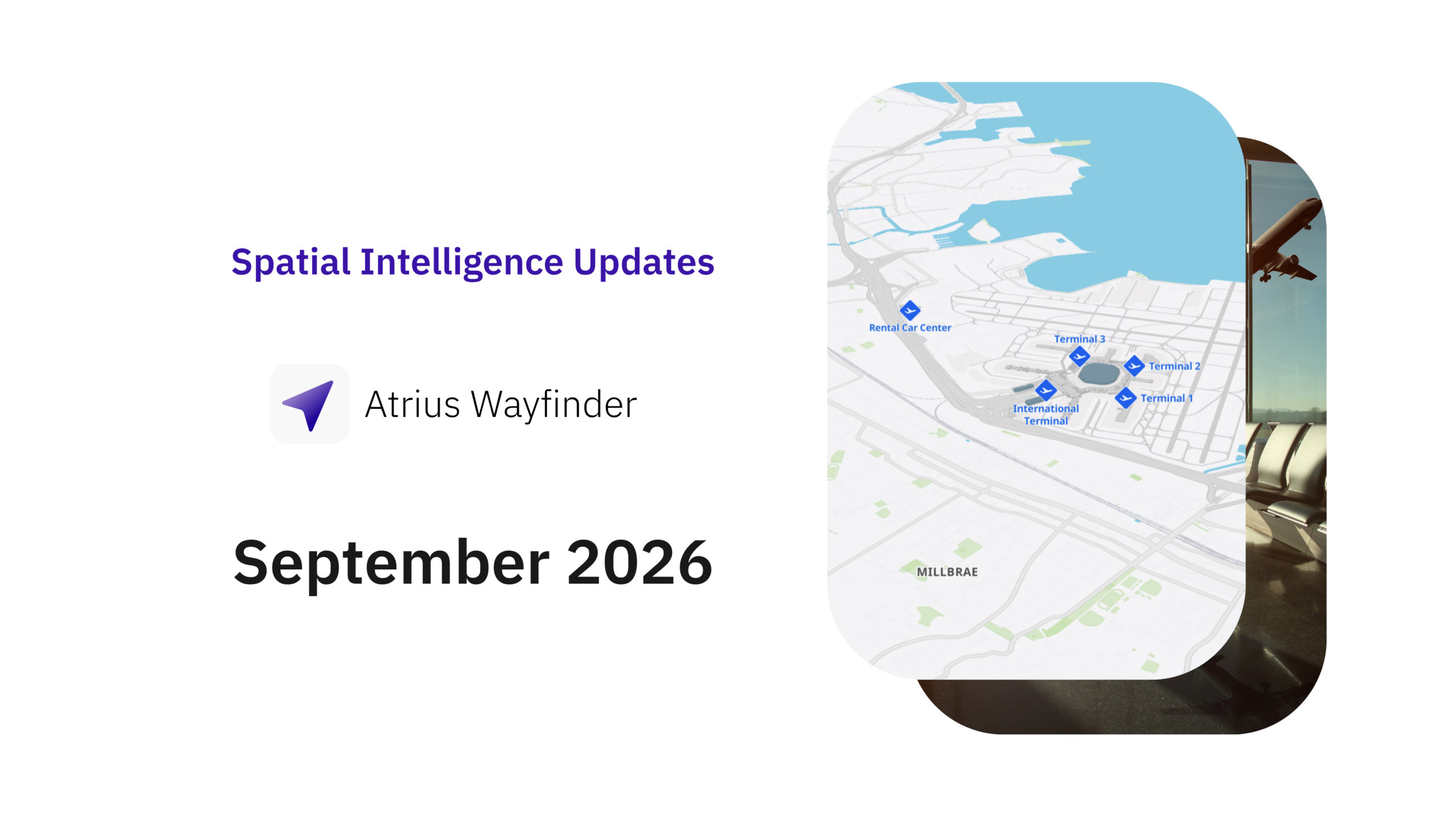
This spring, Atrius Wayfinder delivered a series of updates focused on making indoor navigation more intuitive, more inclusive, and more responsive to real-time events. These improvements reflect a broader shift toward spatial intelligence, connecting maps, live information, and accessibility to support better journeys for everyone. Traveler expectations keep rising, and accessible airport wayfinding is no longer a “nice to have” but a core part of the modern airport experience.
From reaching WCAG 2.2 AA compliance, to adding live security wait times and richer POI capabilities, explore the latest Atrius Wayfinder improvements designed to help travelers move through the airport more confidently with faster routes, clearer guidance, and better accessibility for everyone.
Accessibility: Reaching WCAG 2.2 AA Compliance and Advancing Inclusive Wayfinding Across Every Channel
Accessibility continues to shape how teams design modern wayfinding experiences. This spring, Atrius Wayfinder reached an important milestone by completing accessibility improvements aligned to WCAG 2.2 AA across web, iOS, and Android experiences. As a result, travelers now encounter a more consistent and inclusive experience across every channel they use. Third‑party experts prepared a Voluntary Product Accessibility Template (VPAT), which Atrius provides upon request to document compliance.
Consistent Accessibility Across Web and Mobile
To support this milestone, Atrius released updated iOS and Android SDKs that align accessibility support across platforms. Updated iOS and Android SDKs now enable Atrius Wayfinder to support visual accessibility, screen reader and voiceover functionality, and full keyboard navigation, regardless of device. These updates arrive at an important moment as expectations rise for public‑facing digital services.
Interaction Enhancements That Improve Usability
In addition to platform‑wide improvements, Atrius Wayfinder introduced several accessibility enhancements that directly improve the user experience:
- A new Speed Dial menu keeps essential navigation controls visible and reachable at high zoom levels or on smaller screens. Consequently, travelers who rely on magnification or simplified layouts can navigate with less effort.
- Improved keyboard and screen reader controls for directions make following routes more predictable and intuitive. Travelers can move through the experience without relying on touch input or precise pointer control.
- A keyboard‑accessible photo carousel allows travelers to explore visual information tied to destinations and points of interest. This ensures the experience feels complete and usable regardless of how someone interacts with the interface.
Why This Matters Now
Importantly, these updates arrive ahead of the ADA Title II web accessibility compliance deadline, helping organizations stay aligned with evolving regulatory expectations. However, the impact extends beyond compliance alone. By prioritizing clarity, consistency, and ease of interaction, Atrius Wayfinder supports more reliable navigation for everyone, especially in complex, high‑traffic environments.
Improving Discovery and In-Terminal Clarity
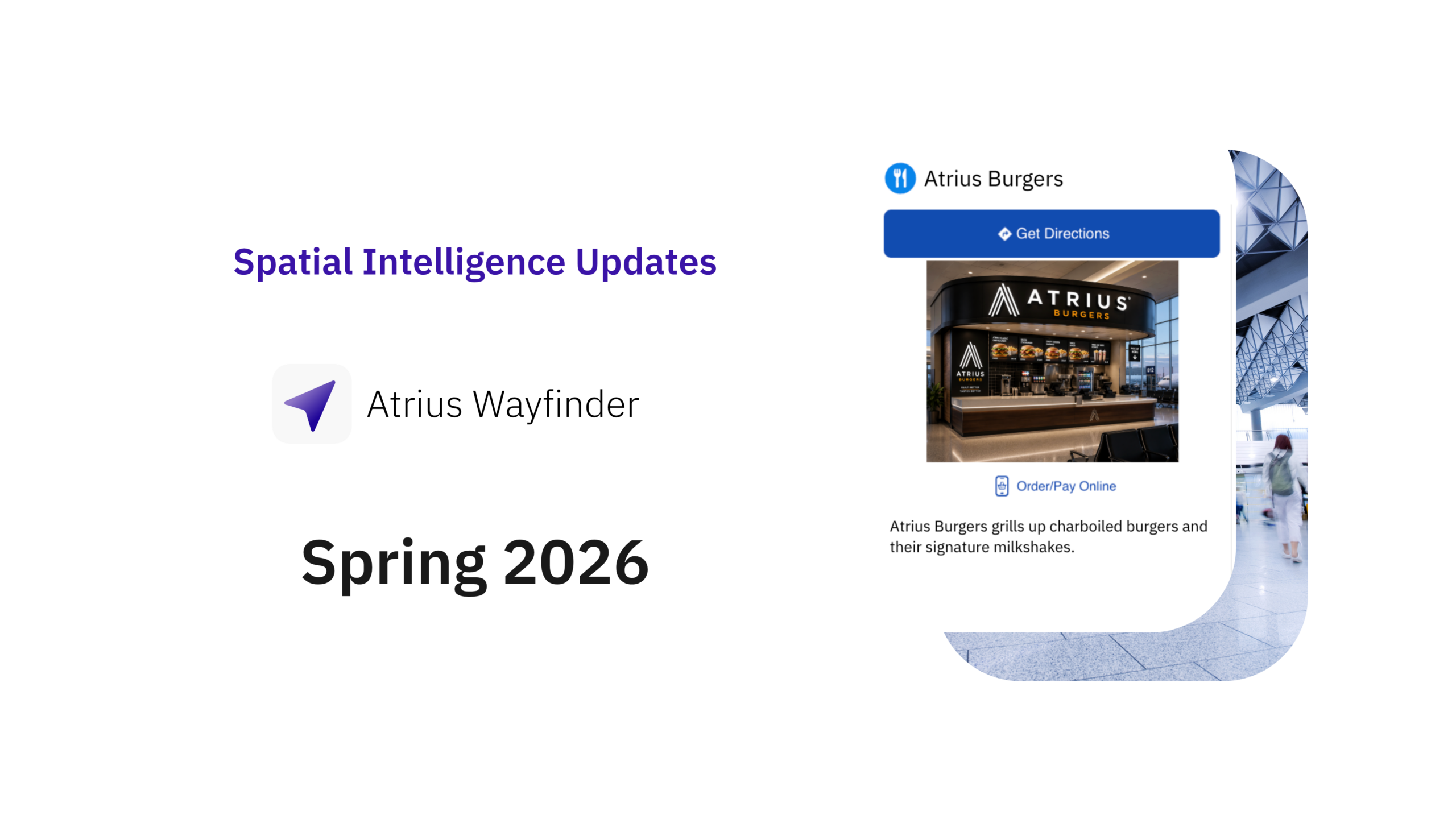
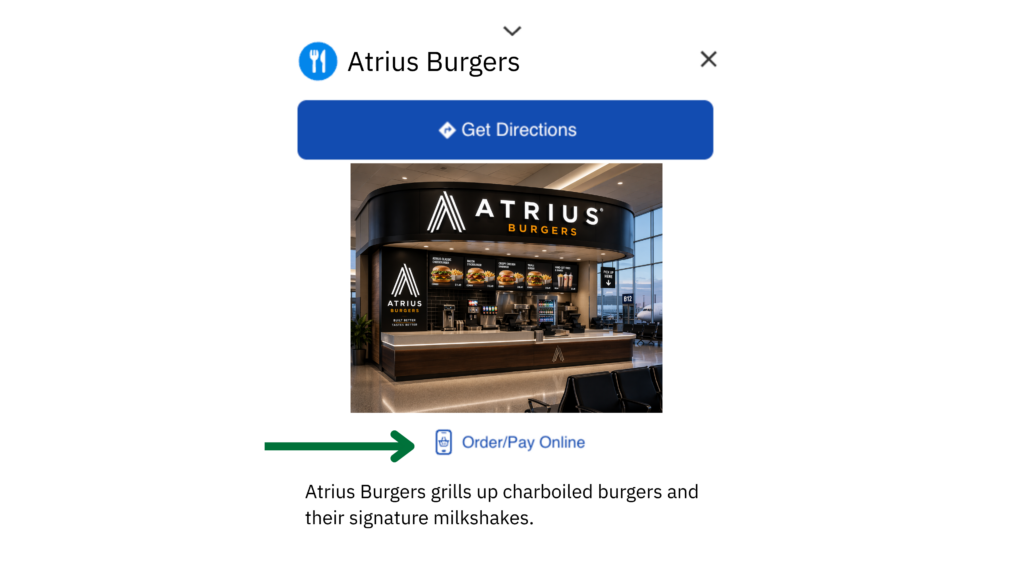
Helping travelers quickly find what they need, including food, services, amenities, and accessible routes, starts with clear, well‑structured information. These latest updates improve how points of interest appear and behave across digital maps, making it easier for travelers to discover amenities and understand available options at-a-glance. For airports and airlines, it means greater flexibility in how services are represented across the terminal.
Delivering Real Time Updates, When They Matter Most
Wayfinding plays a key role in how travelers experience an airport, especially in moments that require quick decisions. Recent updates focus on making navigation feel more intuitive and supportive, helping travelers understand what’s happening around them and move through the terminal with greater confidence.
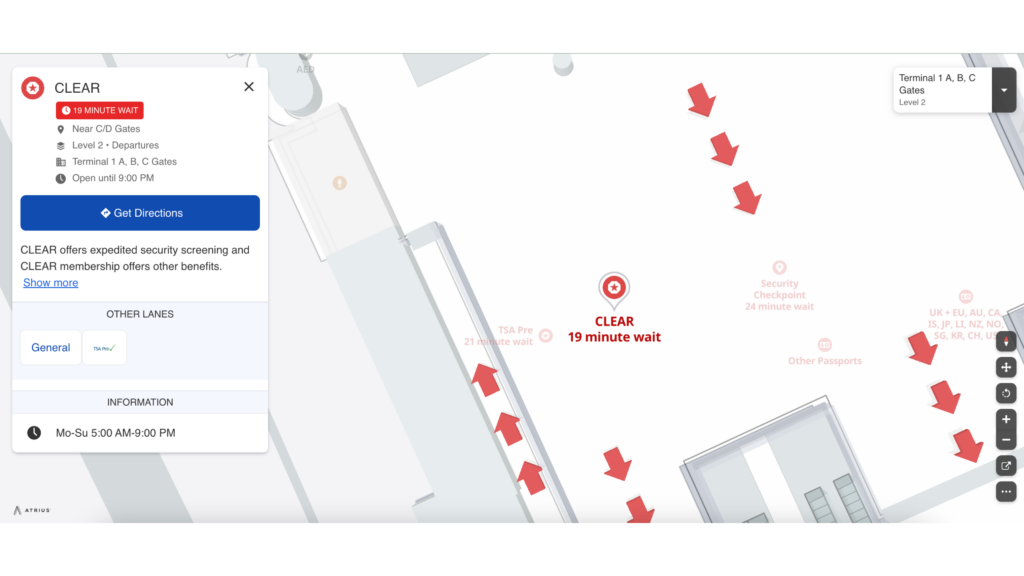
By bringing live operational insights and flight information closer to the map experience, Atrius makes navigation more responsive in time‑sensitive moments such as security and departures. Real‑time context helps travelers anticipate what’s ahead, supporting smoother decision‑making and a more predictable journey through the terminal.
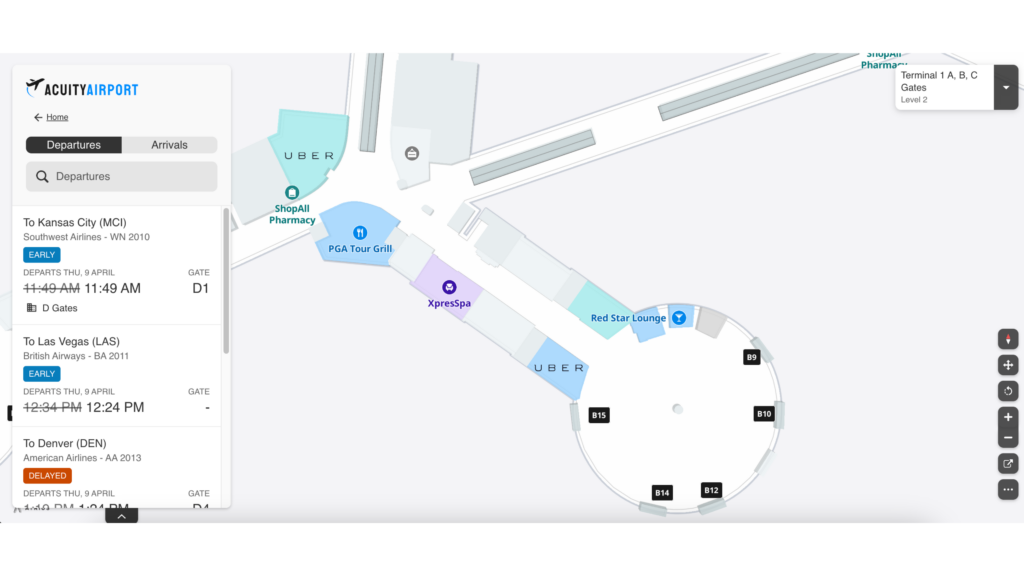
Behind the scenes, these capabilities are supported by flexible APIs that keep information accurate and up to date:
- Live Security Wait Times: Pull real-time security queue estimates for any licensed and integrated venue.
- Real-Time Updates via Push Endpoint: Send live updates by poiId to keep Atrius Wayfinder maps current.
Under the Hood Updates: Strengthening Operational Foundations
For venue teams, we introduced behind‑the‑scenes improvements that simplify day‑to‑day updates and improve reliability as operational needs change:
- New “Book Parking” URL configuration: Teams can now set a “Book Parking” URL directly through the VMS API, enabling parking-related actions to be managed centrally and reflected consistently across experiences.
- Improved POI data management: Teams can now remove phone numbers from Points of Interest, addressing a previous platform limitation and allowing venues to keep information accurate and up to date.
- Performance and stability enhancements: Additional refinements improve map responsiveness and ensure smoother updates after POI edits, helping changes appear more reliably across the platform.
These updates simplify venue management workflows and improve platform stability, ensuring that changes to services, parking, or amenities are reflected quickly and consistently. Although travelers rarely see the behind-the-scenes foundational work, it plays a critical role in delivering across the aviation ecosystem.
Solutions Library Debut
This Spring, we officially launched the Atrius Solutions Library: a growing collection of ready‑to‑use examples and best practices that illustrate how spatial intelligence can be applied to real‑world navigation challenges. The library inspires teams by showing what’s possible when maps, real‑time data, and thoughtful experience design come together.
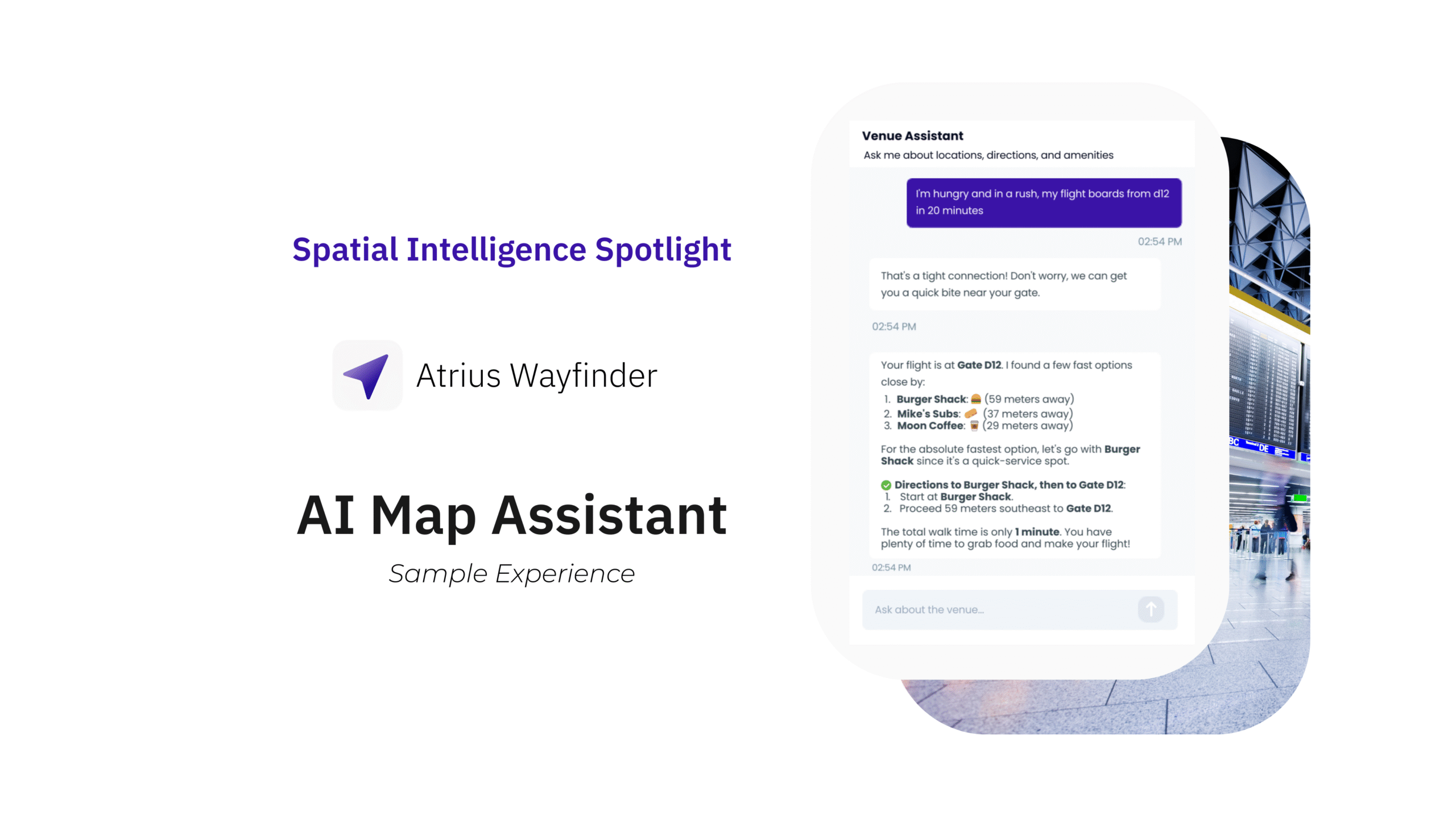
One of the featured solutions is AI Map Assistant, which demonstrates how conversational AI can help travelers interact with maps in more natural, intuitive ways. Rather than browsing through category menus, travelers can ask questions like they would a friend or airport staff, such as “where’s my gate?” or “show me the nearest coffee shop,” and receive clear, context‑aware guidance directly from the map experience. This approach highlights how AI can reduce friction, support accessibility, and make wayfinding feel more responsive and human.
Alongside AI Map Assistant, the Solutions Library also includes Wayfinding Enabled Kiosk, which demonstrates how accessible, production‑ready wayfinding experiences can be brought to life in physical spaces. Together, these solutions provide flexible reference points that teams can adapt to their own environments, audiences, and operational needs as the library continues to grow.
Continuing the Journey of Smarter Navigation
As airports and airlines continue to balance growing traveler expectations with operational complexity, spatial intelligence will play an increasingly important role in shaping experiences that feel clear, connected, and human.
By combining inclusive design, real‑time awareness, and flexible digital foundations, Atrius Wayfinder is helping move the industry beyond static maps toward more responsive and supportive journeys. And this spring’s updates are just one step in what’s ahead.
Have questions or want to see these updates in action? Reach out to your Atrius account manager or contact us to start a conversation. For a more in-depth look, visit our monthly changelog.